
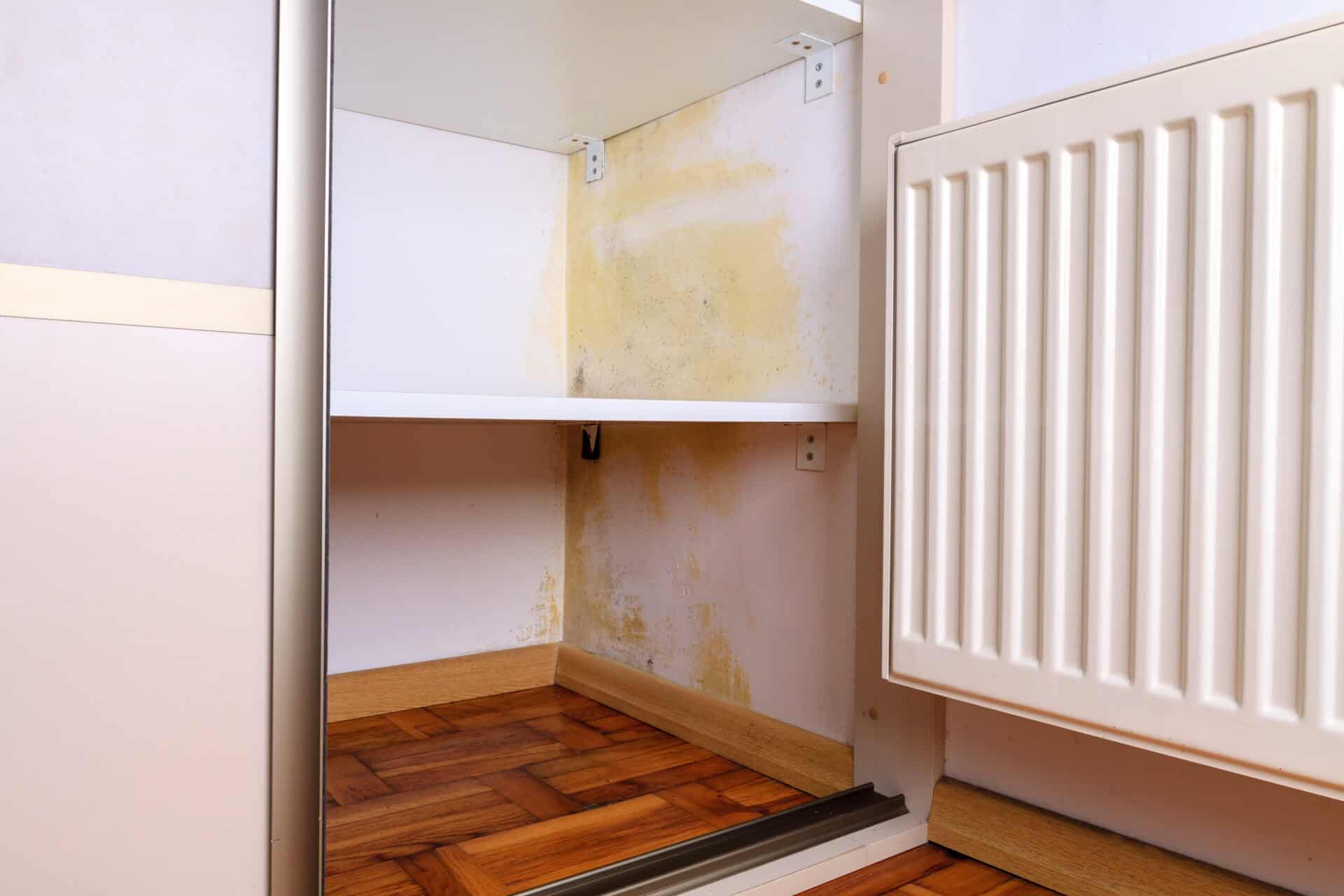
Condensation behind furniture is a common problem in homes where cold walls and restricted airflow create conditions that allow moisture to accumulate. Moving a wardrobe or sofa away from a wall can reveal damp staining or mould that has developed unnoticed, even when the rest of the room appears dry.
Condensation behind furniture often develops because the conditions in the concealed space differ from those elsewhere in the room. The wall may be colder, air movement may be limited and moisture can remain close to the surface for longer.
At Apollo Damp Proofing, we consider these conditions alongside the possibility of other moisture sources. Although condensation is a common explanation for this pattern, damp behind furniture can also be associated with defects in the building itself.
Why Walls Behind Furniture Can Be Colder
The temperature of an internal wall surface is influenced by the temperature outside, the insulation within the wall and the amount of heat reaching it from the room. External walls can be particularly cool during the colder months, especially where insulation is limited or interrupted.
A large wardrobe placed close to such a wall can reduce the amount of heat reaching the surface. The furniture effectively separates a small area of the wall from the warmer conditions elsewhere in the room. A similar effect can occur behind a sofa or a fitted cupboard.
Corners and junctions may also be colder than surrounding surfaces. Where two external walls meet, or where insulation is interrupted by a structural detail, heat may escape more readily. These locations can be particularly susceptible to elevated surface humidity.
It is possible for a room to feel comfortably warm while a concealed wall surface remains considerably cooler. A thermostat measures conditions at its own location and cannot describe the temperature behind every item of furniture. This explains why a problem may be concentrated in one place even when the room is regularly heated.
The precise behaviour of the wall depends on its construction. Improving the movement of warm air around furniture may help in some circumstances, while a significant insulation defect or external moisture problem may need a different response.
How Restricted Airflow Changes the Conditions Behind Furniture
Air movement helps distribute heat and moisture within a room. When furniture is positioned tightly against a wall, the narrow gap can have relatively little circulation. The air within it may remain cooler and closer to the conditions of the wall surface.
Moisture produced through ordinary activities, such as cooking, bathing and breathing, can move throughout a home. When that moisture reaches a cool, poorly ventilated space, the relative humidity near the wall may increase. If moisture is not removed effectively, the conditions can persist.
Large pieces of furniture are particularly relevant because they can obstruct a substantial area of wall. Fitted wardrobes may create enclosed spaces with limited ventilation, while a sofa pushed into a corner can restrict circulation along two surfaces at once.
It is not necessarily the furniture itself that introduces moisture. Rather, its position may create conditions in which moisture already present in the indoor air is more likely to affect a cold surface.
Opening a window elsewhere in the room may help reduce overall indoor humidity, but it may not immediately improve circulation behind a tightly fitted cupboard. Effective condensation control considers both the moisture content of the indoor air and the conditions at the affected surface. The most useful improvements will depend on which factors are contributing most strongly.
Why Condensation Can Develop Even Without Visible Droplets
Condensation occurs when air containing water vapour is cooled sufficiently for liquid water to form. The temperature at which this happens is known as the dew point. A surface that falls below the dew point of the adjacent air may therefore become wet.
However, visible droplets are not required for damp-related surface problems to occur. As air near a cold wall cools, its relative humidity rises. Even before liquid condensation is obvious, sustained high humidity at the surface can create conditions favourable to mould growth.
Porous materials may also absorb small quantities of moisture, making the changes less obvious than droplets on a window. Wallpaper, painted plaster and timber-based furniture can show staining, deterioration or mould growth without appearing visibly wet every day.
This is why a brief examination of the room may not reveal the full pattern. Conditions can change overnight, during cooking or after a shower. An affected surface may become damp during one part of the day and appear drier later.
Conversely, finding mould behind a wardrobe does not prove condensation is the sole cause. External water penetration and concealed plumbing leaks can also keep surfaces damp. The pattern, temperature, moisture history and surrounding construction all need to be considered before identifying a suitable solution.
How Heating, Insulation and Indoor Moisture Interact
Managing condensation is not simply a question of opening more windows or turning up the heating. The temperature of the wall, the moisture generated indoors and the effectiveness of ventilation all influence the conditions behind furniture.
Heating can raise room and surface temperatures, reducing the likelihood that indoor air will meet a sufficiently cold surface. Insulation can also help maintain warmer internal surfaces. However, insulation improvements should be designed around the construction of the building, particularly where traditional materials or existing moisture problems are involved.
Ventilation helps remove moisture produced by everyday household activities. The GOV.UK ventilation guide explains the importance of maintaining suitable ventilation in existing homes. Extractor fans, background vents and other designed ventilation provisions should be used and maintained appropriately.
In colder weather, balancing ventilation and warmth can be challenging. Leaving a property excessively cold while moisture continues to be generated may increase condensation risk. At the same time, heating a home without adequately removing indoor moisture may not resolve the underlying problem.
An assessment should consider whether moisture is being extracted at its source, whether the ventilation system works as intended and whether particular wall surfaces remain unusually cold. These factors interact, which means a combination of improvements may be more appropriate than relying on a single measure.
Practical Ways to Improve Airflow Around Furniture
Where furniture can be moved safely, leaving a gap between large items and external walls may improve circulation. The appropriate spacing depends on the room, furniture and wall conditions; there is no single distance that guarantees a dry surface.
National Energy Action provides practical guidance on managing condensation and mould, including improving airflow around furnishings. Where possible, avoid positioning very large cupboards in the coldest corners of a room if this repeatedly creates problems. Consider whether alternative layouts allow heat and air to reach the affected wall more freely.
Keep existing ventilation openings clear. Use suitable extract ventilation when bathing or cooking, and consider how moisture from drying clothes is managed. Where the home has background vents or a mechanical ventilation system, follow the relevant operating and maintenance instructions rather than blocking openings to eliminate draughts.
These measures are most useful when the underlying issue is associated with indoor humidity and cold surfaces. They cannot repair defective gutters, leaking pipes or damaged external masonry.
If mould is present, address it promptly and follow suitable public health guidance. Avoid disturbing extensive growth or assuming that cleaning alone will solve the problem. The conditions responsible for persistent moisture need attention, especially where occupants are particularly vulnerable to its effects.
When Persistent Damp Needs Further Investigation
If damp behind furniture continues despite reasonable changes to heating, ventilation and airflow, the next step is to investigate why the surface remains affected. Persistent moisture may indicate an external defect, an unusually cold construction detail or another source that has not yet been identified.
Consider whether the problem changes after rain, whether it appears near a plumbing route and whether similar marks are present elsewhere. Record the pattern before moving or cleaning the affected items, where it is safe to do so. These observations can help guide an inspection.
A specialist may consider internal humidity, surface temperatures, ventilation arrangements and external wall condition alongside moisture readings. The exact approach depends on the property and the nature of the problem. A single meter reading or a photograph of mould cannot establish all these factors.
Where the problem involves several interacting conditions, recommendations may include addressing a building defect as well as improving ventilation or thermal performance. It is important that the advice reflects the actual findings rather than placing responsibility automatically on household habits.
At Apollo Damp Proofing, we can help investigate persistent damp and advise on suitable next steps. Understanding why moisture is collecting behind the furniture is the starting point for deciding how best to address it.