
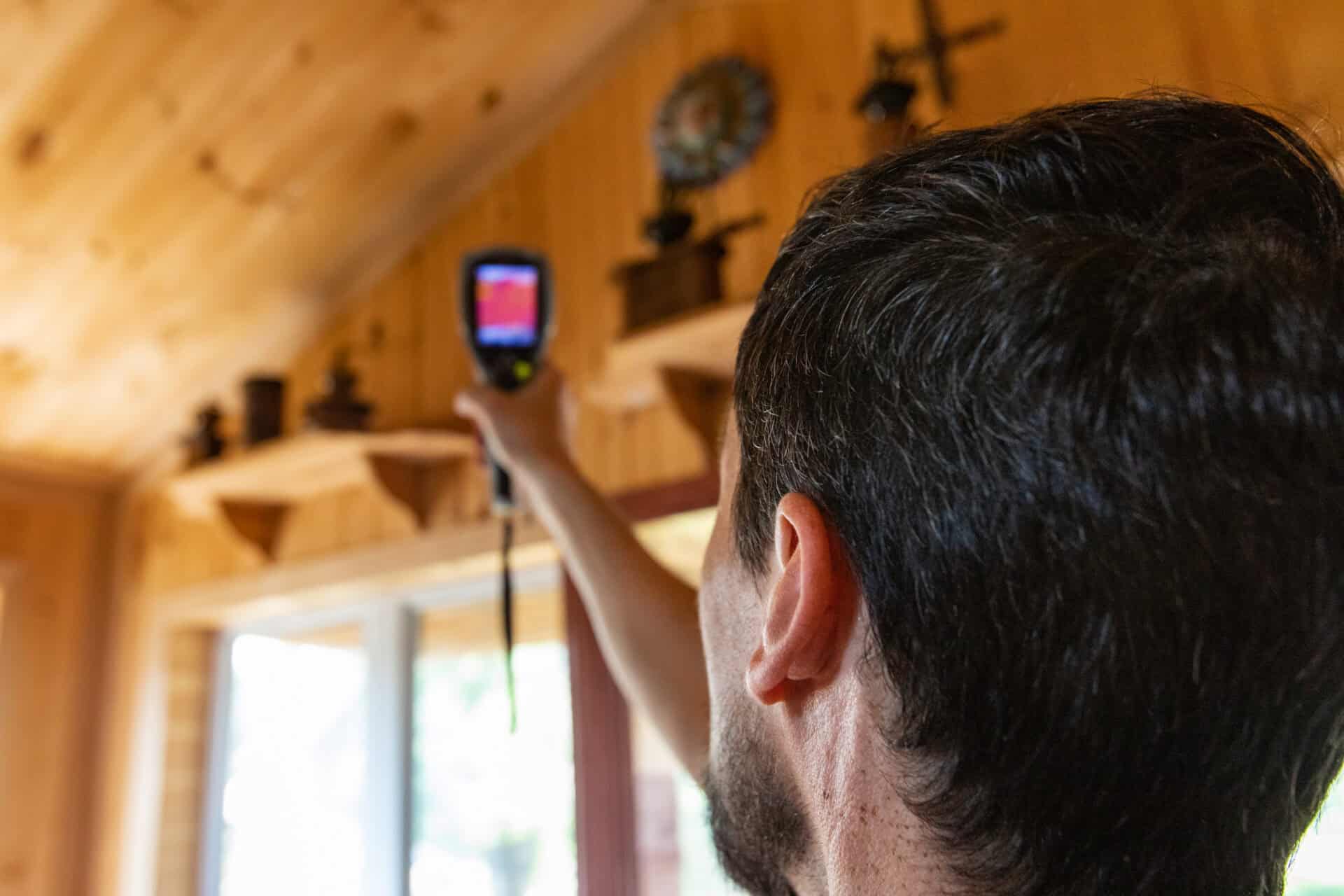
A damp inspection is an opportunity to understand why moisture is affecting a property before deciding what work is necessary. It is not simply a matter of identifying a mark on a wall or taking a reading from a moisture meter.
The investigation should consider the building, its condition and the circumstances in which the problem occurs. This helps distinguish possible causes and identify whether further examination is required.
At Apollo Damp Proofing, we believe that homeowners should understand the reasoning behind any proposed treatment. Knowing what an inspection may involve, how to prepare and what questions to ask can make the process more useful.
What a Surveyor Checks Inside and Outside the Property
A damp inspection typically begins with a discussion about the affected areas and the history of the problem. The visible moisture pattern is considered in relation to the construction of the building, the position of external walls, floor levels and nearby openings or services.
Externally, the inspection may look at rainwater drainage, roof junctions where visible, masonry condition, render, window details and ground levels. A defect above or beside the affected room may be relevant even when it does not align directly with the internal stain.
Inside, the assessment may consider wall finishes, moisture distribution, ventilation and surface conditions. A low-level mark might prompt questions about the floor-to-wall junction and any identifiable damp-proof course. Mould in a cold corner could lead to an examination of airflow and humidity.
The RICS consumer guide recommends considering the wider building context when investigating damp. The purpose is to develop and test possible explanations rather than simply match the appearance of a damp patch to a particular treatment. What can be inspected will depend on access, the building and the agreed scope of the visit.
How to Prepare for a Damp Inspection
Before the appointment, make a note of the rooms affected and the parts of each room where moisture appears. Photographs can be useful, especially if the problem varies with weather or time of day. If possible, record when the damp was first noticed and whether its appearance has changed.
You do not need to diagnose the problem before the visit. A simple description of the symptoms is often more useful than an assumption about their cause. For example, explaining that a bedroom wall becomes darker after prolonged rainfall provides an observation that can be explored.
Avoid undertaking unnecessary cosmetic repairs immediately before the inspection. Fresh paint or newly applied coatings may obscure useful evidence. Equally, do not delay necessary action where there is an active leak, electrical concern or other immediate risk.
Where previous repair reports, survey findings or photographs are available, have them ready. These can help the person investigating understand what has already been tried and whether the problem changed afterwards.
What Information to Share About the Moisture Problem
The history of a damp problem can be as significant as its visible appearance. Tell the surveyor whether the problem started suddenly or developed gradually, whether it changes with rain and whether it is more noticeable during particular seasons.
Mention changes to the property, including extensions, replacement windows, new floors, rendering and landscaping. Alterations may affect ventilation, thermal performance, drainage or moisture pathways. They do not necessarily cause the problem, but understanding their timing can help guide the investigation.
Information about previous treatments is also relevant. If a wall was replastered or a damp-proof course was installed, explain when the work was carried out and whether the symptoms improved. Where documents are available, the details may help establish what was actually installed.
It can also be useful to describe how the affected room is normally used. This is not about assigning blame to occupants. Heating, ventilation and activities that produce moisture form part of the environmental context and may help explain differences between rooms.
What Access a Surveyor May Need
An inspection is more informative when the relevant areas can be examined safely. Where practical, clear a reasonable amount of space around affected walls and accessible floor junctions. This may allow the surveyor to see areas behind furniture that would otherwise be concealed.
Do not attempt to move heavy fitted units, dismantle finishes or access roofs on your own. If an important area cannot be examined, the limitation can be recorded and discussed. Further access may require permission, specialist equipment or a separate appointment.
In a rented property, arrangements may need to be coordinated with the landlord or managing agent. Where the building contains shared external walls, communal roof areas or other inaccessible elements, investigation may depend on the cooperation of the relevant parties.
Confirm the expected scope of the visit beforehand. A non-intrusive inspection may identify possible causes and recommend next steps, but it cannot necessarily establish the condition of concealed construction details.
What Moisture Readings Can and Cannot Establish
Moisture meters can provide useful information about differences between areas and materials. However, the results must be interpreted in context. Instruments designed for particular materials may not give a direct measurement of moisture content when used on plaster or masonry.
Salts, conductive materials and differences in the composition of a wall can influence electrical readings. A high indication does not automatically mean that water is rising from the ground, nor does a low indication exclude a concealed moisture problem.
The joint position statement on moisture investigation published by RICS and other professional bodies sets out principles for investigating moisture in traditional buildings. It emphasises the importance of understanding construction and using evidence appropriately when assessing the cause.
Depending on the circumstances, other observations or measurements may be needed. These could involve humidity, temperature, moisture distribution or a more detailed examination of the building fabric. The appropriate methods depend on the question being investigated.
A useful explanation of findings should distinguish between what has been observed, what is considered likely and what remains uncertain. This is more valuable than presenting an isolated reading as a definitive diagnosis.
When Further Investigation May Be Recommended
Sometimes an initial inspection identifies a clear defect that can be addressed without more extensive investigation. In other cases, the available evidence may suggest several possible explanations, or an important part of the building may be concealed.
For example, a suspected defect at the junction between a floor and wall may not be visible behind existing finishes. An intermittent plumbing leak may require a specialist leak investigation. A roof problem may need closer examination by someone with appropriate equipment and access.
Further investigation should have a defined purpose. It is reasonable to ask what information is missing, why the proposed examination is needed and how its findings could influence the recommended work.
Any intrusive work should be discussed and agreed beforehand, including the implications for reinstating affected finishes. Where appropriate, a specialist may recommend monitoring conditions over time rather than making assumptions based on a single visit.
Recognising uncertainty can prevent inappropriate treatment.
What to Look for in the Findings and Recommendations
The findings should help you understand the relationship between the observed moisture and the proposed response. A clear explanation will normally identify the relevant areas, discuss the evidence and describe the most likely cause or causes, subject to any limitations.
Recommendations should address the moisture source rather than simply the damaged surface. If an external defect is contributing, for example, the necessary maintenance or repair should be considered before internal finishes are reinstated.
Look for a distinction between work considered necessary, work that may be beneficial and further investigation recommended before a decision is made. This helps you understand the sequence of the work and avoid assuming that every proposed measure is equally urgent.
Ask whether drying, monitoring or follow-up assessment may be appropriate. Drying times vary with materials, conditions and the amount of moisture involved. A useful recommendation should reflect that variation rather than promising a universal timetable.
Confirm beforehand what written documentation is included.
Questions to Ask Before Agreeing to Treatment
Before instructing remedial work, make sure you understand what the treatment is intended to achieve. Ask which observations support the diagnosis, whether other possible sources have been considered and whether the recommended work addresses the source or the resulting damage.
It is also worth asking whether any separate repairs are needed, what access will be required and how the effectiveness of the work can be assessed. If a warranty or guarantee is offered, check its written scope, exclusions and conditions rather than assuming it covers every future moisture problem.
Where significant uncertainty remains, ask what further investigation could resolve it. A recommendation should be proportionate to the findings and compatible with the building’s construction.
At Apollo Damp Proofing, our damp survey service is intended to help establish the likely cause of moisture problems and identify appropriate next steps. If you are concerned about persistent damp, arranging an assessment can provide a more informed starting point than choosing a treatment based solely on the appearance of the affected wall.